Where is the Agafay Desert?
Agafay stretches between the Amizmiz road and Lake Lalla Takerkoust, in the commune of Oumnass, around 25 km from the centre of Marrakech. You reach it via the Amizmiz road (R203): our base is at kilometre 16, at the Afriquia petrol station, which means 30 to 40 minutes by car from Jemaa el-Fna square depending on traffic. The plateau sits between 550 and 700 metres above sea level, a little higher than Marrakech.
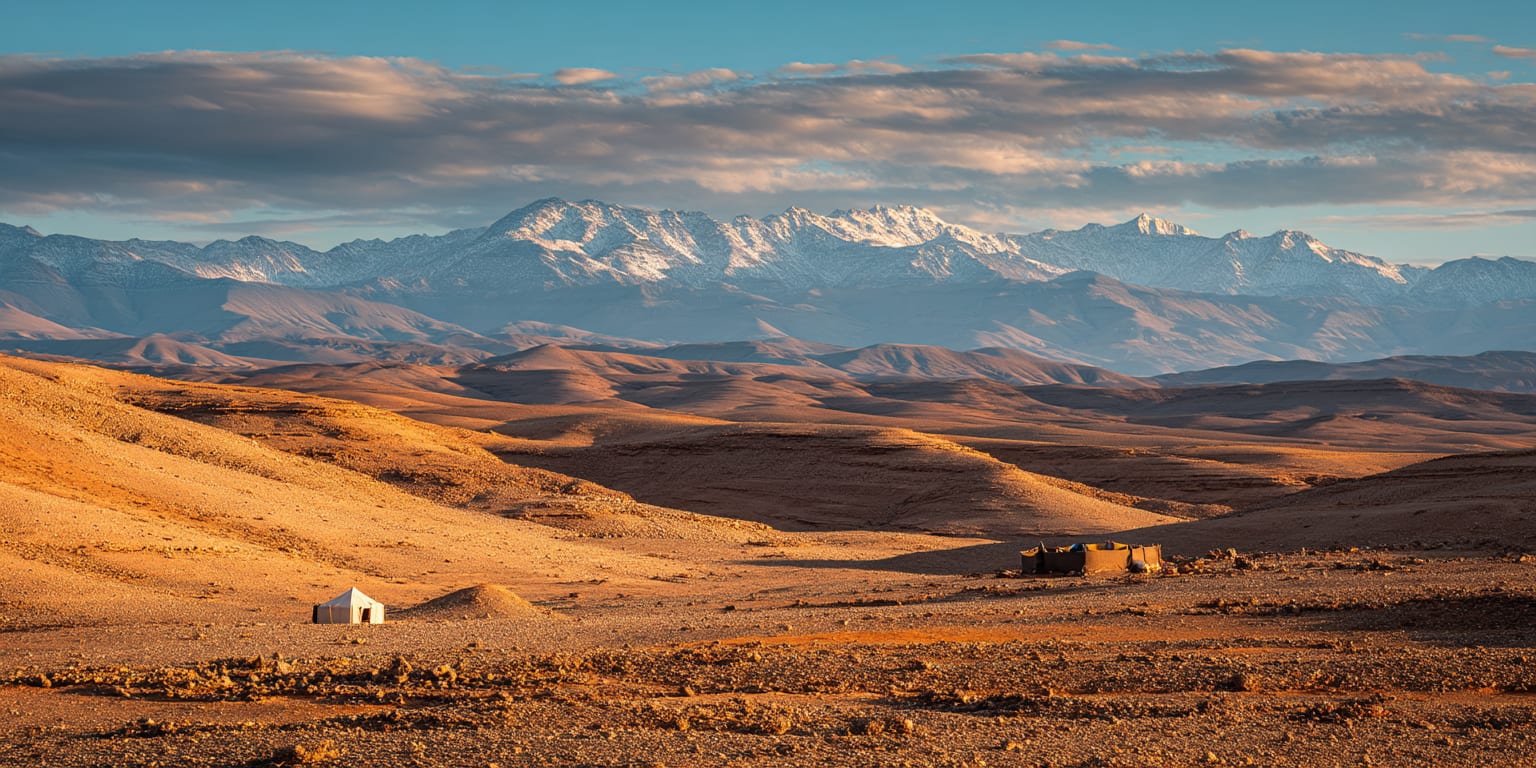
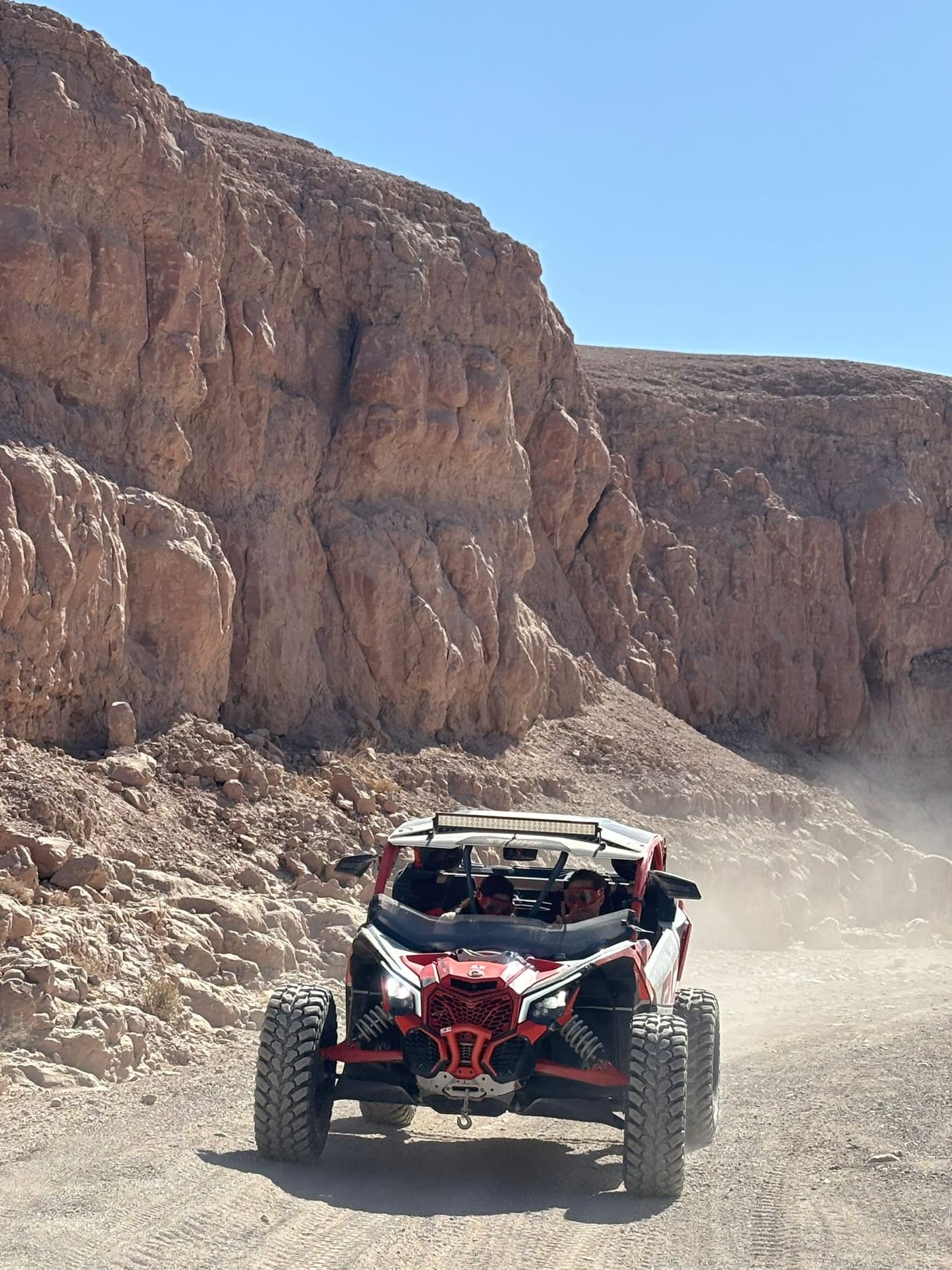
The word “desert” often surprises visitors expecting dunes. Agafay is a reg, a desert of stone and ochre earth shaped by erosion: rounded hills, riverbeds that are dry most of the year, a few Berber villages and tented camps scattered in the hollows. In winter and spring, the snow-capped peaks of the High Atlas close the horizon; that contrast is what made its reputation.
Agafay or the Sahara: the differences in brief
The nearest Sahara dunes, at Merzouga or Zagora, are 9 to 10 hours’ drive from Marrakech. Getting there takes at least two days, often three, with a long crossing of the Atlas each way. Agafay can be visited in half a day, and you’re back at your hotel in time for dinner.
If you dream of huge orange sand dunes and a night under the Milky Way far from everything, the Sahara remains in a league of its own, but it costs two days of your holiday. If you want a genuine desert landscape, driving on trails and a sunset over the Atlas without sacrificing your stay in Marrakech, Agafay is made for you. Many travellers do both: Agafay for the buggy or quad, the Sahara for the overnight desert-camp experience. Agafay or the Sahara: the answer mostly depends on how much time you have.
What to do in the Agafay Desert?
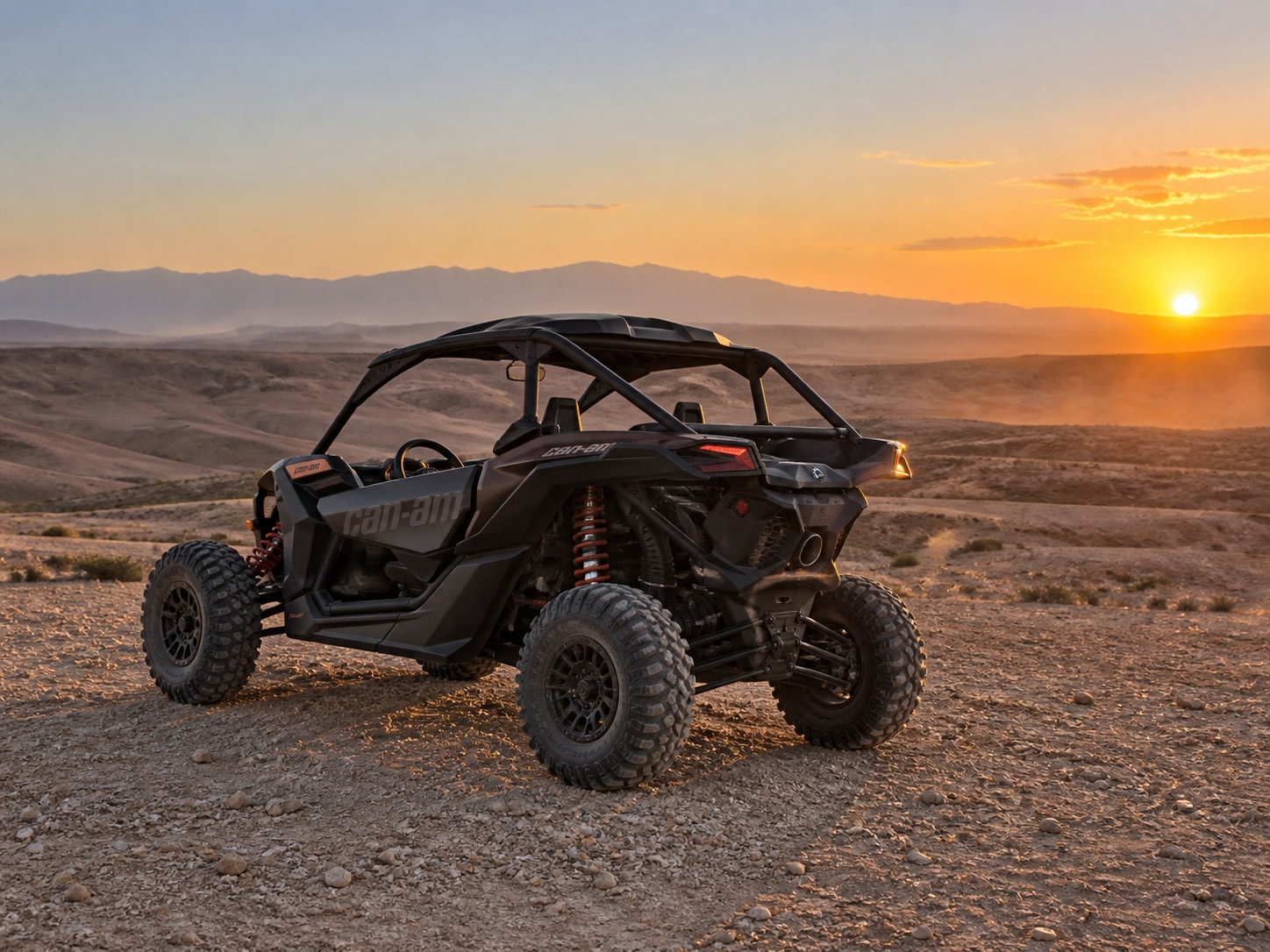
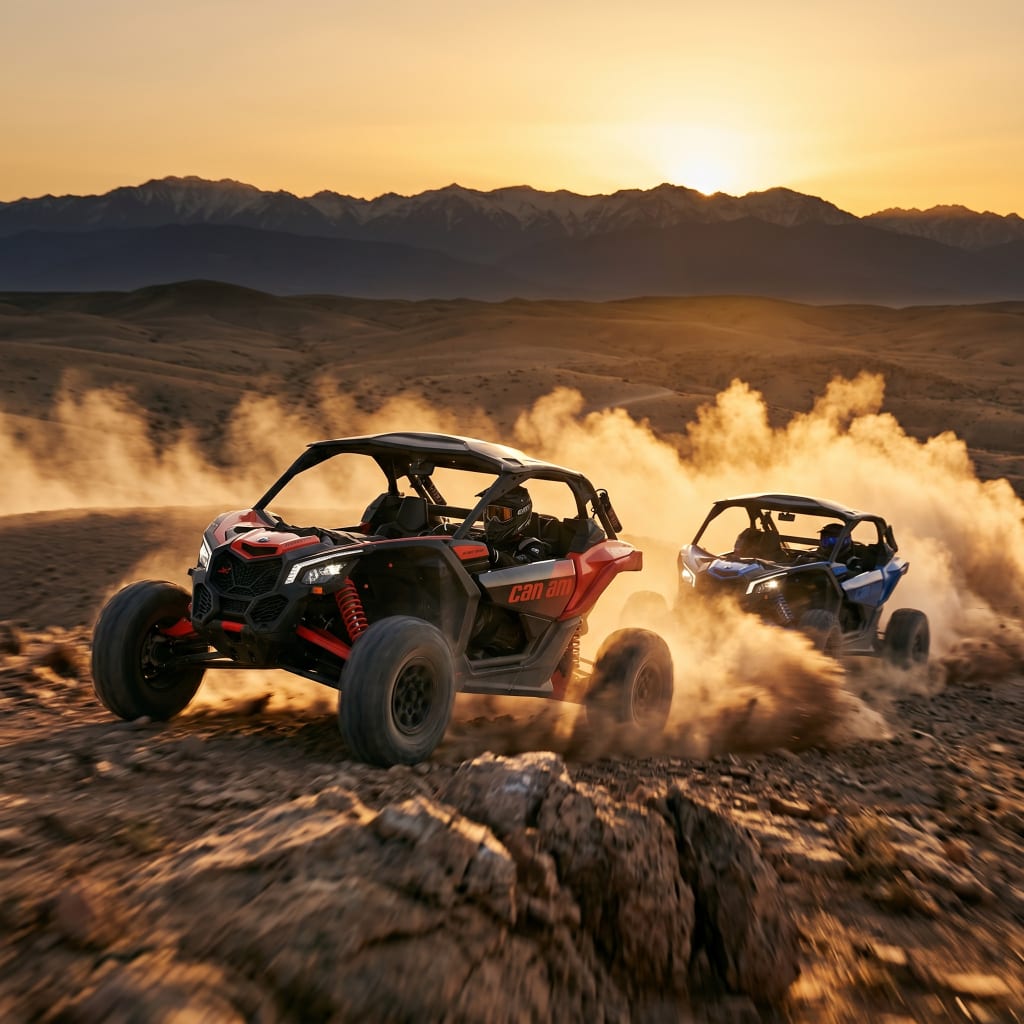
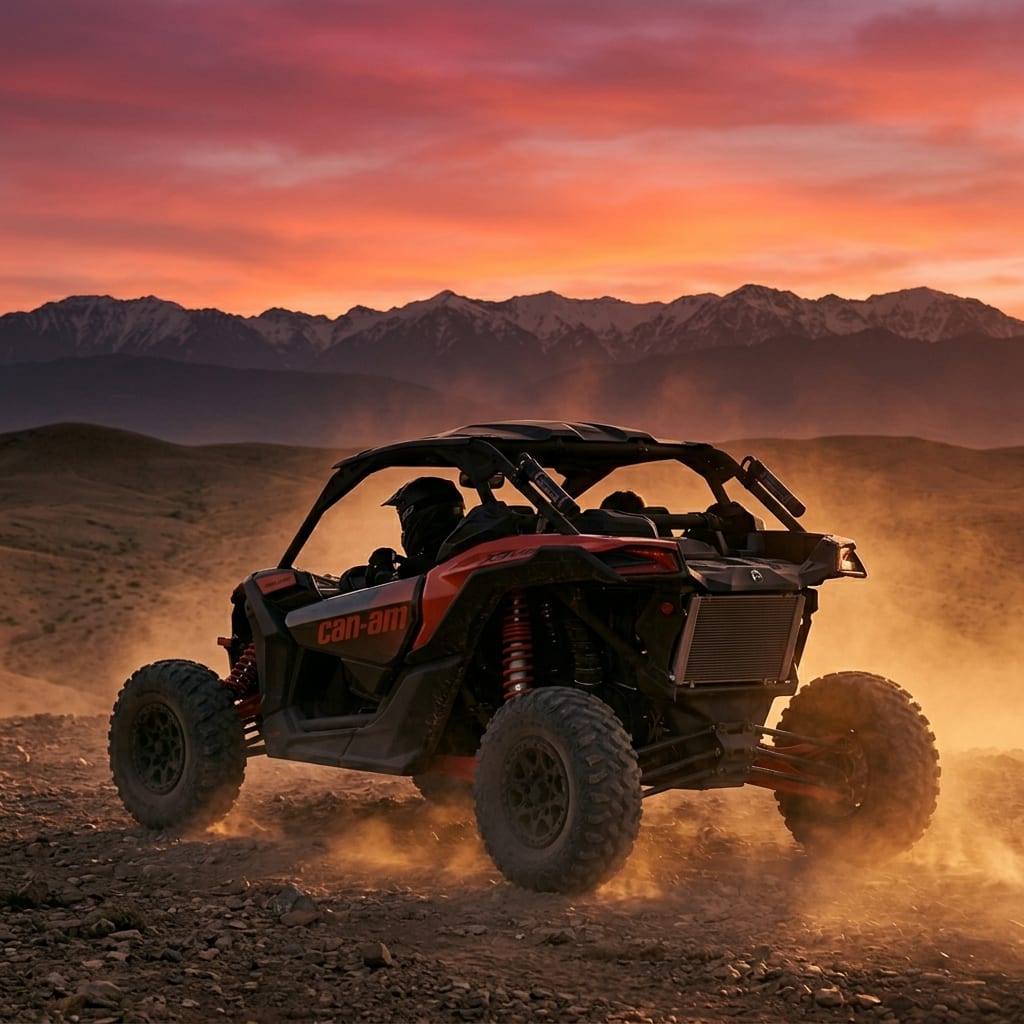
The buggy and the quad are the headline activities: the rocky terrain, riverbeds and open trails suit driving far better than sand does. Our 1- and 2-hour rides leave straight from the base; the half-day tour and the full-day raids push on to Lake Takerkoust or the Kik Plateau. Sunset, when the rock turns orange and the Atlas lights up, is the most photogenic moment.
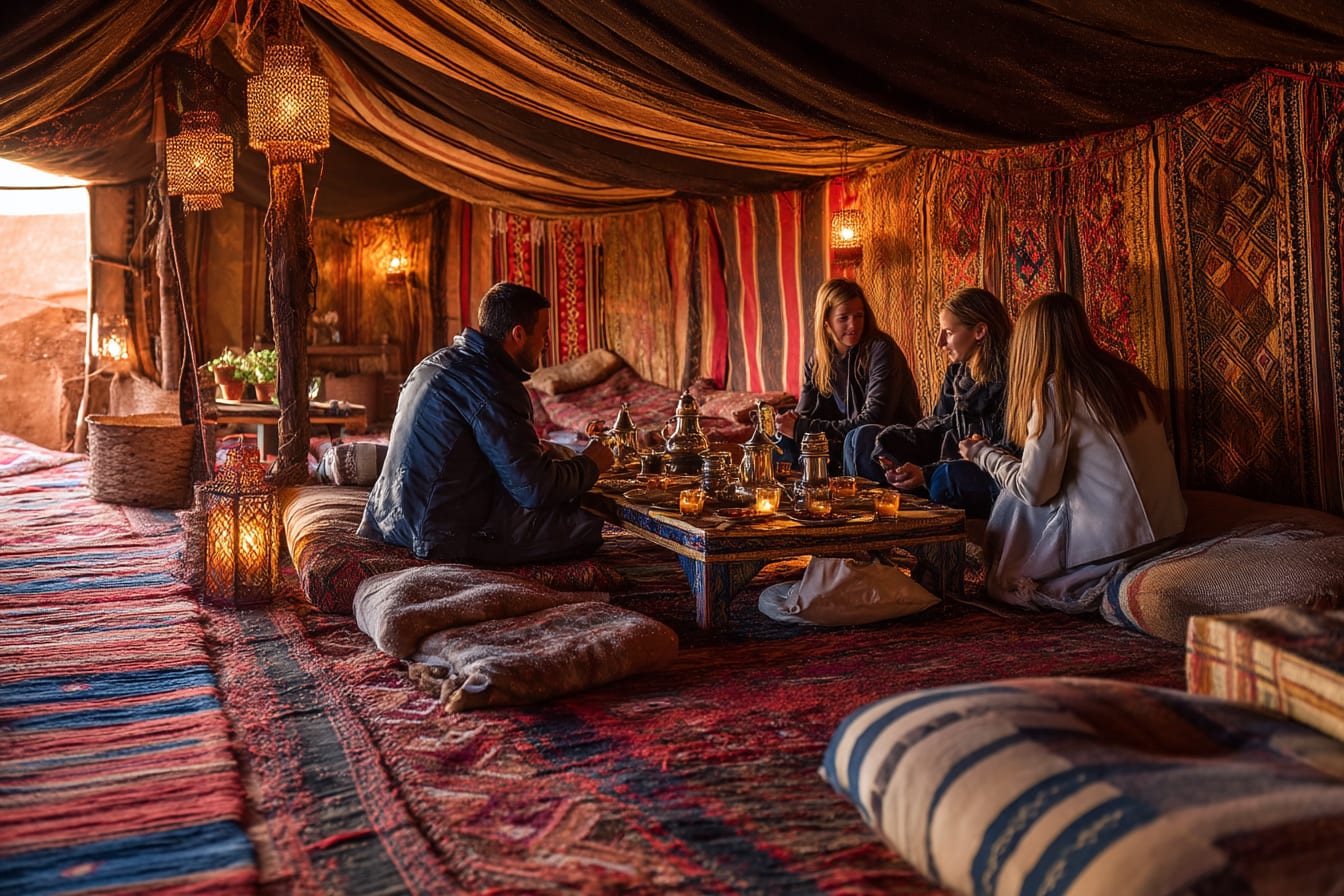
Beyond driving, Agafay offers camel rides, lunches and dinners in Berber tented camps, sometimes with music and a fire show, and nights in luxury camps. A late-afternoon buggy ride pairs easily with dinner at a camp: we work with several neighbouring camps and can arrange it all for you.
Where to stay in Agafay?
Most visitors sleep in Marrakech and come out for the day: it is a 35-minute drive, and the city holds the bulk of the accommodation. That is the simplest choice for a short stay, or when you are combining the medina, the Atlas and Agafay.
On site, staying over mostly means a tented camp: anything from a plain bivouac to the so-called luxury camps, with furnished tents, a pool and dinner served under canvas. Around Lake Lalla Takerkoust and along the Amizmiz road you will also find guesthouses and lodges in solid buildings. Two things to know: the road back is unlit, and the nights stay cool for much of the year, even after a hot day.
We run none of these places and single none of them out: you book them direct, like a hotel. What we do arrange is the sequence — a late-afternoon ride followed by dinner at a neighbouring camp, whether you sleep out there or head back to Marrakech afterwards.
Agafay weather: temperatures and rainfall
There is no weather station on the plateau itself: the nearest reference is Marrakech Menara, 25 km away. Its 1991-2020 normals, published by NOAA, give average highs of 19 °C in January, 26 °C in April, close to 38 °C in July and August and 28 °C in October, with an average low of 6 °C in January.
Rain is scarce: around 220 mm a year, nearly three quarters of it between November and April, and under 5 mm a month from June to August. It can still fall outside that window, and if it makes the trails dangerous we postpone the ride free of charge, to the date of your choice.
The Agafay plateau follows the same curve with an altitude twist: at 550 to 700 metres, shadeless and windier than the city, it cools down markedly faster once the sun drops.
When to visit Agafay?
Agafay is worth visiting all year round, but the season changes the ride completely. Spring and autumn are the best window. From March to May and from October to November, expect 23 to 30 °C in the daytime, dry trails and superb low-angle light; September still behaves like summer. In spring the Atlas is snow-capped at the back of the scene.
In summer, heat is the only real constraint: the plateau is bare rock without a single tree, and the middle of the day is punishing out there. Ride early in the morning or late in the afternoon, when the air drops. The sunset ride is built for that window, and its page gives six reference times across the year, from about 5:45 pm in December to 7:55 pm in June and July.
In winter the days stay mild and sunny and the air is crystal clear, but the nights are cold: an average low of 6 °C in January in Marrakech, and cooler still up on the plateau. A windproof jacket is essential for the end of the day.
During Ramadan our hours change; rides still run, and we confirm your meeting time with you.
How to get there and how long to allow?
From Marrakech, allow 35 minutes by taxi, ride-hailing app or hire car along the Amizmiz road. The meeting point is our base at the Afriquia petrol station, km 16: a fixed address that’s easy to give to a driver. A return transfer from your hotel or riad can be arranged as an option.
For a 1-hour ride, allow 2 h 30 door to door; for 2 hours of driving with the tea break, half a day; for the raids, a full day. ID is required at check-in. Find the details on our page about getting here from Marrakech.
Who to book with for a buggy or quad ride in Agafay?
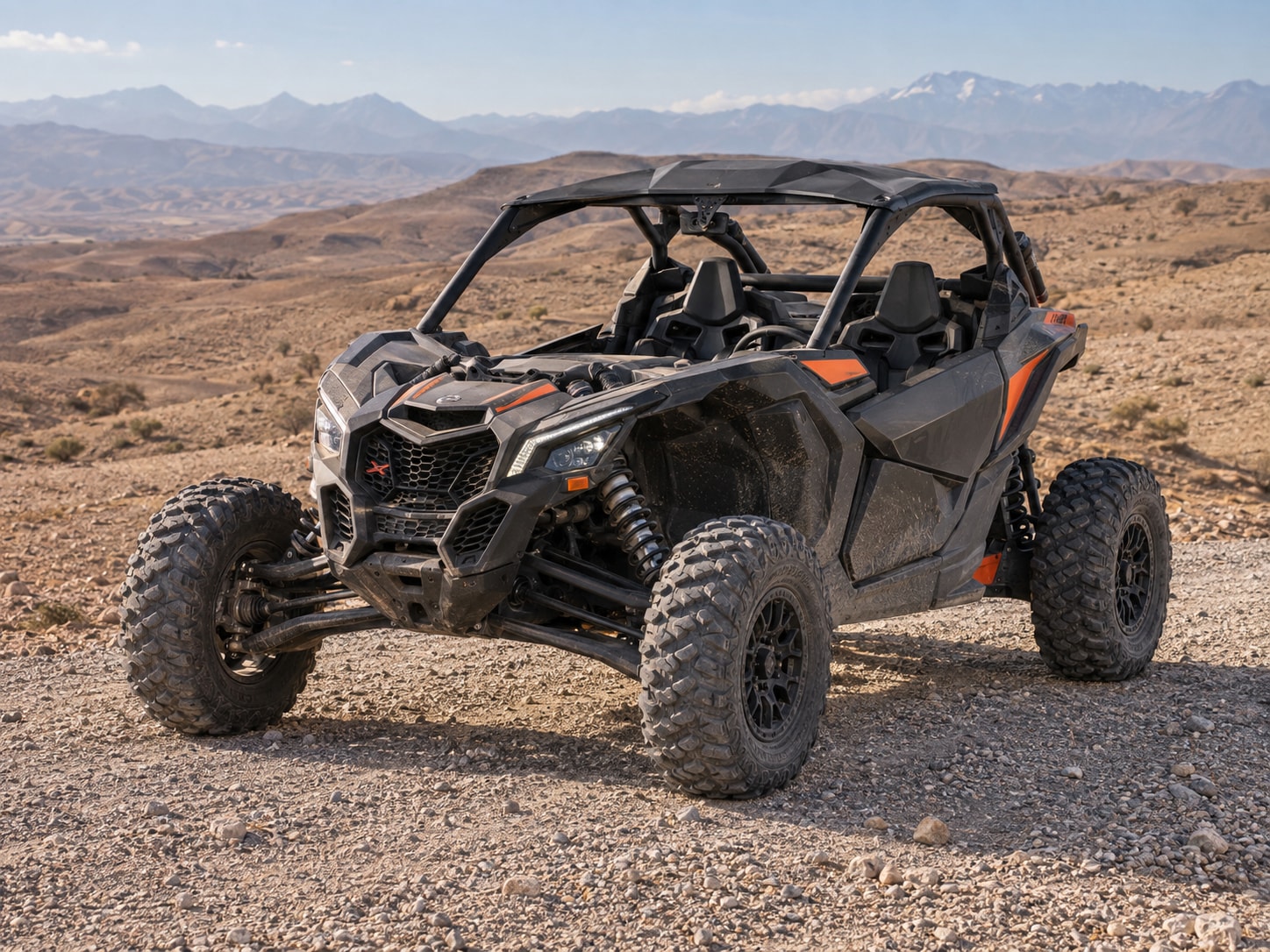
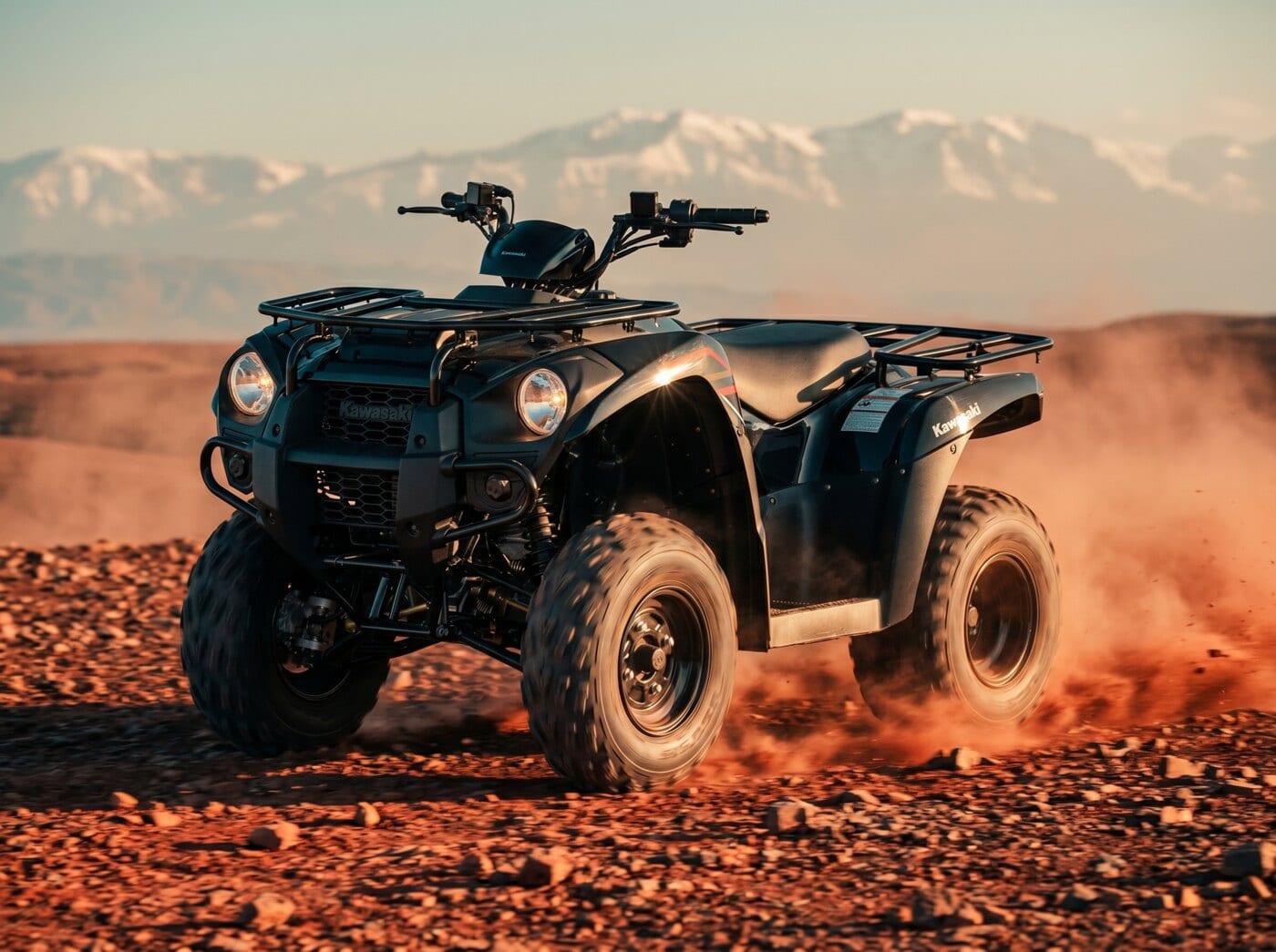
Buggy Agafay is an operator based on site, at the Afriquia petrol station, with its own fleet of Can-Am Maverick X3 buggies and Kawasaki and Can-Am quads. Every ride leaves with a guide, a safety briefing and full equipment; prices are shown per vehicle on our buggy and quad prices page and confirmed before you arrive. No licence is required, children ride as passengers from age 6 and drivers from 16.
Also read: Agafay vs Sahara: which desert to choose · What to wear for a ride in Agafay